

A rate lock usually doesn’t transfer to a new lender, but you can switch lenders before closing. To understand how to switch from a bad lender mid-project, compare the replacement financing’s terms with the cost of restarting parts of the process and the risk of missing a deadline. The rate lock alone doesn’t determine whether switching makes sense.
If your lender is creating problems, it’s reasonable to look for another path without putting the project or purchase at risk. Assess the financing and timeline together instead of focusing only on a lower rate or a frustrating lender relationship.
This article explains how a rate lock, new application costs, and underwriting can affect a lender change, and why timely communication with the seller and real estate agent matters. You’ll also see how purchase-contract deadlines shape the decision and where private money brokerage may fit when a project needs a different financing structure.
Key Takeaways
- Treat a rate lock as tied to its original lender, and weigh the replacement terms against the time needed to close.
- Account for possible repeat costs, such as a new appraisal or underwriting review, when assessing whether a switch makes financial sense.
- Keeping the existing application active until replacement financing is formally approved can preserve a backup path.
- Coordinate updates with the seller and real estate agent early so any revised closing timeline is addressed before deadlines become urgent.
Coordinating the switch with the purchase contract and closing date
Borrowers can change mortgage lenders before the loan closes and servicing begins, under the Truth in Lending Act (TILA) and the Real Estate Settlement Procedures Act (RESPA). A rate lock usually doesn’t transfer, so the replacement lender may offer a different interest rate or require a new lock. The purchase contract remains central: it sets the closing date and financing deadlines, regardless of which lender is processing the loan.
Compare Loan Estimates line by line, including the interest rate, APR, lender fees, origination charges, points, lender credits, and total cash required at closing. A lower rate may not reduce the actual cost if points or fees increase. For a one-unit property in most areas, the baseline conforming loan limit was $832,750 in 2026, according to the Federal Housing Finance Agency. The standard high-cost conforming loan limit referenced is $1,249,125, according to the Federal Housing Finance Agency.
Construction loan terms and rates vary by project and financing structure. Compare the proposed rate with draw procedures, repayment terms, maturity, and extension provisions. A lower rate alone may not suit the project’s schedule or capital needs.
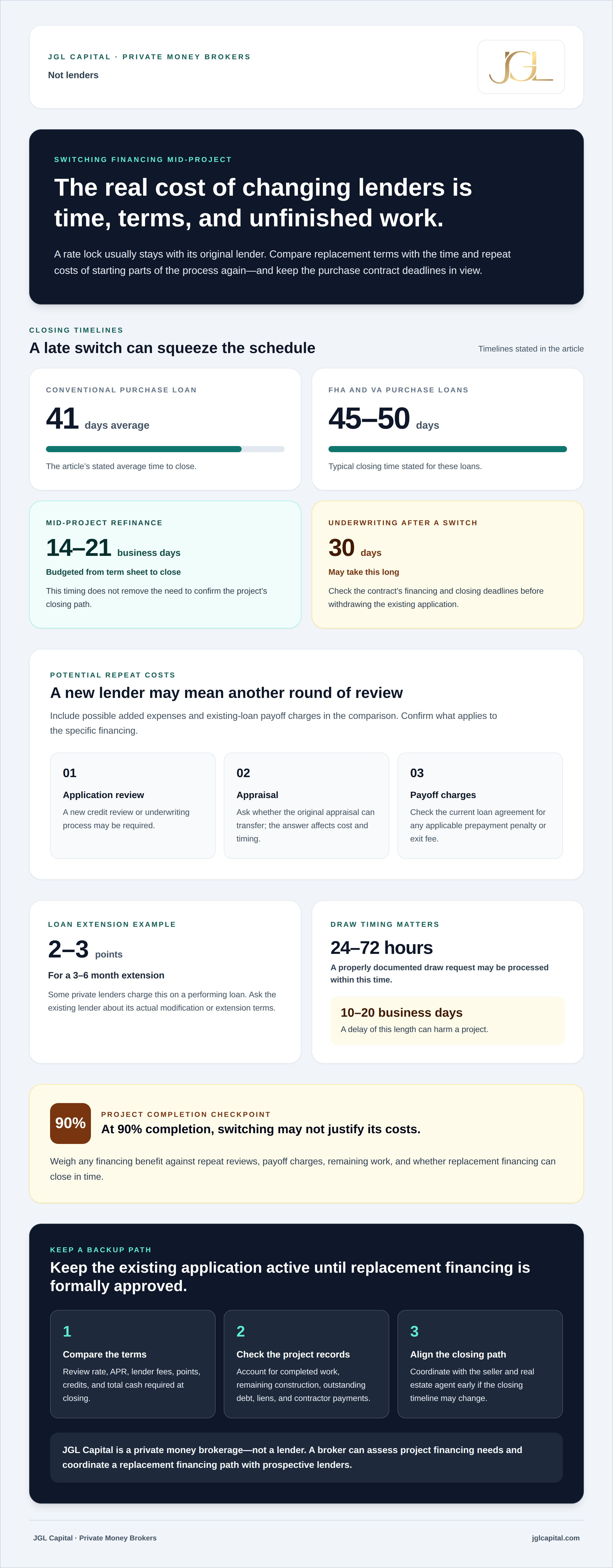
Conventional purchase loans take an average of 41 days to close, while FHA and VA loans typically take 45-50 days. Those timelines make a late switch consequential. Review the contract’s financing contingency and closing dates with the transaction team, then establish whether the new lender can meet them before withdrawing the existing application.
Changing lenders doesn’t itself put earnest money at risk, but missing a contract deadline or failing to close can. State laws and local closing requirements may affect documentation and timing, while the purchase contract sets the agreed deadlines.
Costs and delays from switching after applying
Replacing construction financing after work begins may require a new review of the property, project status, and outstanding balance. Consider both the added expense and whether replacement financing can close in time to support the work.
Duplicate Application and Appraisal Costs
A new application may require another appraisal, credit review, or underwriting process, even if the original lender has already completed similar work. Ask whether the first appraisal can transfer, since the answer affects both the financing budget and timeline.
Switching Fees and Exit Charges
Switching costs may include fees from the new lender and charges under the existing loan’s payoff terms. A prepayment penalty or exit fee depends on the current loan agreement, so include any applicable charge in the payoff calculation before deciding.
Paying Off the Existing Loan
A new lender may structure financing to pay off an existing construction loan before the project is complete, subject to its review of the property, remaining work, and repayment plan. A broker can assess the project and outstanding debt, then help arrange replacement financing and coordinate the proposed payoff. This may support project continuity, but the new financing needs to account for work already completed and funding still required.
Mid-Project Switching Risks
Changing lenders can interrupt available financing, delay work, or leave the borrower with costs that outweigh the benefit. A mid-project refinance is budgeted at 14 to 21 business days from term sheet to close, while underwriting after a lender switch may take 30 days. A broker evaluates the project and financing requirements, then coordinates a replacement path. Projects at 90% completion may not justify switching costs. Explore private money financing options when a project needs an alternative structure.
Keeping the existing loan application as a backup while a broker arranges replacement financing
Keeping the original application active preserves an alternative while a broker arranges replacement financing. To limit financing risk, wait for the replacement lender’s formal approval before cancelling the existing application.
A broker reviews the project’s financing needs and updated documents, then coordinates a replacement application with prospective lenders. The new lender may request updated income verification, bank statements, and tax returns. It may also assess the property’s current condition, completed work, and remaining construction through an appraisal or project review. These materials help the lender determine the amount and terms it may approve.
Requirements and financing options vary. One lender may focus on the project’s current value and completion plan, while another may assess repayment capacity or structure funding differently. A broker can present the project details to potential financing sources, including outstanding debt, contractor obligations, and the funds needed to finish. Compare proposed terms and closing costs with the original loan before deciding which application to pursue.
Ask the existing lender about modifying or extending its loan while replacement financing is arranged. Some private lenders charge 2 to 3 points for a 3 to 6 month extension on a performing loan. Draw timing matters, too: a properly documented request may be processed within 24 to 72 hours, while a 10 to 20 business day delay can harm a project. Outstanding draws, liens, and contractor payments need to be reconciled in the payoff and funding plan so obligations are not overlooked.
Cancel the original application only after the replacement lender formally approves the financing and the closing path is clear. Keeping a backup can reduce the chance that delays disrupt project payments or put earnest money at risk. The broker coordinates the updated application and lender communications; the borrower provides requested documents and confirms project records. Keep both paths aligned until the replacement financing is ready to close.
Coordinating communication about a lender switch with the seller and real estate agent
Changing lenders can affect the closing timeline, so tell the seller and real estate agent early. If you’re working out how to switch from a bad lender mid-project, explain why you’re making the change, the replacement lender’s status, and whether the contract schedule may change. Share confirmed details, not expectations the new lender hasn’t supported.
Start with the closing date and financing contingency deadline in the purchase contract. The buyer’s agent can explain why the current lender is being replaced and whether the new application has entered underwriting. If the replacement lender hasn’t confirmed its timeline, say so. Don’t present a hoped-for closing date as settled before the lender provides a basis for it.
The seller needs to know whether the transaction can still proceed on the agreed terms. An update can identify outstanding items, such as an appraisal or underwriting review, and when you expect to provide the next update. If the closing date may need to move, raise the proposed change promptly and document any contract amendment through the transaction process. This gives the seller a chance to consider a specific request before the deadline passes.
The real estate agent can help the buyer, seller, title team, and lenders work from consistent information. The agent can track contract deadlines, share confirmed updates, and confirm receipt of a revised closing proposal. Meanwhile, the broker can coordinate with both lenders so payoff information and financing timing are reflected in the plan. Clear responsibility for each update helps prevent conflicting dates.
Keep written records of lender updates, seller communications, and contract changes. Changing lenders alone doesn’t put earnest money at risk, but delays that lead to a missed deadline can. Be clear about what underwriting has confirmed, and tell the seller promptly if the expected schedule changes. Timely, accurate communication gives everyone a chance to respond while the transaction is still on track.
JGL Capital LLC
JGL Capital LLC is a private money broker, not a lender. It helps property investors assess potential replacement financing when an existing arrangement no longer fits the project, connecting financing needs with prospective capital sources rather than providing the loan itself.
That may include considering New Construction Loans, Multi-Family Loans, Bridge Loans, or Commercial Real Estate Loans, depending on the property and project. The relevant factors include work completed, remaining funding needs, the current loan payoff, and the closing timeline. Bringing those details together helps frame the financing request and the transition from the existing lender.
If you’re weighing a lender change for a real estate project, contact JGL Capital LLC to discuss your financing needs.
Move Forward With a Clear Financing Plan
A lender change is also an opportunity to reconsider how the financing fits the project’s next stage. Instead of focusing only on replacing a difficult lender relationship, define what the project needs as work progresses. A sound plan for how to switch from a bad lender mid-project aligns the next financing decision with the property, remaining work, and intended exit.
JGL Capital is a private money broker, not a lender. It helps property investors explore New Construction Loans, Multi-Family Loans, and Bridge Loans from prospective lenders. A useful first conversation starts with the project’s current position and the financing outcome you’re seeking.
Discuss your lender switch with JGL Capital and take the next step with a clearer view of your project’s financing needs.
Frequently Asked Questions
Can I switch lenders if I’m already locked into a rate?
Yes. A rate lock generally applies to the lender that issued it, so switching usually means applying for a new lock with the replacement lender. Compare the new offer’s rate, APR, points, lender credits, and cash due at closing before proceeding. For example, a lower quoted rate may not reduce the overall borrowing cost if the new offer includes higher charges.
Will switching lenders hurt my credit score?
A new lender may request another hard credit inquiry, which can temporarily lower a score by a few points. Scoring models may treat mortgage inquiries made within a shopping window as one inquiry, but the window varies by model, from 14 to 45 days. Keep other credit activity stable during the application, since new debt or a major purchase can also affect underwriting.
Can I Switch Lenders After Signing a Purchase Contract?
Yes. Signing a purchase contract doesn’t require you to use the lender named in a preapproval letter. The contract is between buyer and seller, so changing lenders doesn’t automatically change its closing or financing deadlines. For example, if the replacement lender requests an additional document, the buyer still needs to meet the existing schedule unless the parties agree to amend it.
Can You Refinance With a Different Lender?
Yes. Once the original mortgage closes, replacing that lender requires new financing to pay off the existing loan. A refinance with a different lender may be considered for a construction loan during a project, subject to the lender’s review of the property, completed work, remaining budget, and repayment plan. Account for payoff terms and any applicable exit charges as well.
Is it too late to switch if I’m two weeks from closing?
Not automatically, but switching close to closing carries substantial timing risk. The replacement lender may still need to review documents, order or assess an appraisal, complete underwriting, and prepare closing conditions. The key question is whether those steps can be completed before the purchase contract’s deadlines. If not, the buyer may need a seller-approved extension to avoid missing the closing date.
Do state laws or local requirements affect changing construction lenders?
Yes. State laws and local closing requirements may affect documentation and timing, while the purchase contract sets the agreed deadlines.