
A first-time investor may qualify for a fix-and-flip loan, but eligibility is only one part of managing risk in fix and flip investments. Fix-and-flip lenders typically set minimum FICO scores around 660 to 680, while the project’s budget, timeline, and resale assumptions also shape the decision. A sound plan matters as much as getting the financing in place.
It’s easy to focus on the purchase price and renovation estimate, but risk can emerge throughout a fix-and-flip project, from acquisition through resale. This guide explains how to budget for unexpected work and holding costs, assess market timing, understand factors that may affect financing eligibility, and manage risk at each stage. The goal is to evaluate the whole project before committing capital.
Key Takeaways
- Build renovation estimates around necessary repairs first, and leave room in the budget for hidden issues, permit delays, and material changes.
- Use recent comparable sales and local buyer demand to set a conservative resale estimate before committing to a property.
- Include taxes, utilities, insurance, and loan interest in holding costs, since delays can reduce profit and tie up capital.
- Assess financing alongside the project’s budget, timeline, and resale plan; managing each investment stage helps expose risks before they compound.
1. Renovation budgets and contingency funds
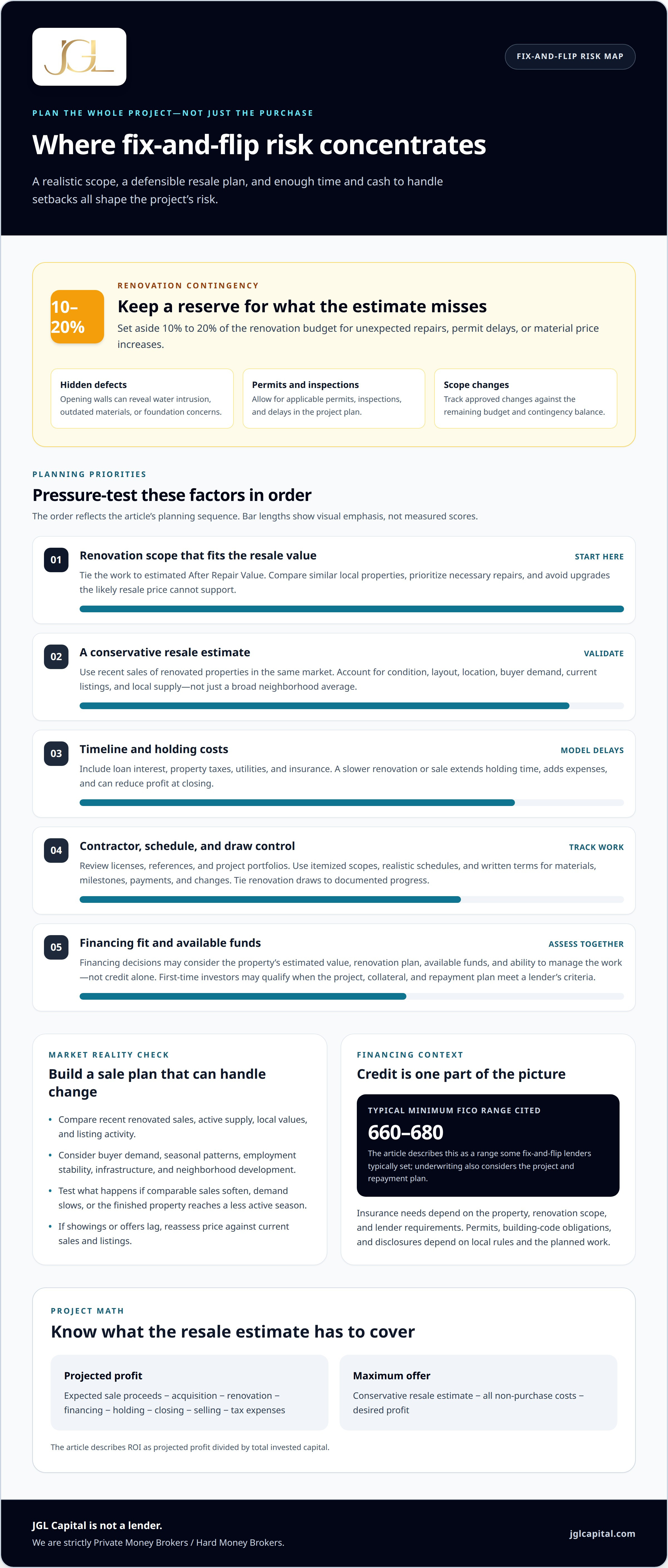
Start with a realistic renovation scope tied to the property’s estimated After Repair Value. Compare similar local properties to avoid budgeting for upgrades the likely resale price cannot support. Investors must also reserve 10% to 20% of the renovation budget for unexpected repairs, permit delays, or material price increases. Keep cash available for issues that emerge after work begins.
A property inspection can identify structural concerns, safety issues, roof damage, and plumbing or electrical problems before purchase. It cannot expose every hidden defect; opening walls may reveal water intrusion, outdated materials, or foundation concerns. According to the U.S. Environmental Protection Agency, firms compensated to disturb paint in housing built before 1978 must be certified. Include inspection findings and potential compliance work in the feasibility assessment.
Screen contractors by reviewing relevant licenses, references, and project portfolios. Request itemized scopes, realistic schedules, and written terms covering materials, milestones, payment timing, and approval of changes. A clear contract helps you track commitments and address scope changes before they disrupt the budget. Make sure the plan accounts for applicable permits and inspections.
Choose renovations for the likely buyer, not personal taste. A family-oriented property, for example, may benefit more from durable finishes and functional storage than from premium decorative details. Prioritize necessary repairs, then weigh targeted kitchen, bathroom, and curb-appeal improvements. After the work is complete, staging, quality photography, and a focused online listing can present the improvements clearly.
Tie renovation draws to documented progress and inspection points for completed work. Before submitting a request, organize invoices, photographs, and relevant inspection records for review. Coordinate payment milestones with the renovation schedule, since draw timing can affect contractors’ ability to keep work moving. Track the funds remaining after each draw, and update the contingency balance when approved changes affect the scope.
2. Evaluating market conditions and timing
Before purchasing, estimate resale value using recent sales of renovated properties in the same market. Account for differences in condition, layout, location, and buyer demand rather than relying on a broad neighborhood average. Review local values, listing activity, and seasonal patterns to assess whether the estimated sale price and timing support the project’s profit target.
Demand depends on more than nearby listings. Assess local supply, employment stability, infrastructure projects, and neighborhood development. A plant closure or a company relocating its headquarters can affect buyer demand and property values. Borrowing costs also influence buyers’ purchasing power. Consider these factors when testing whether an optimistic resale estimate remains realistic under less favorable conditions.
Use market analysis to build a conservative selling plan, not a single best-case forecast. Test how returns change if comparable sales soften, demand slows, or the renovation finishes during a less active season. A delayed sale extends holding time, adding expenses and potentially reducing the profit left at closing. Set an asking price that reflects current conditions and the return the project needs.
Prepare a marketing plan before renovation work ends. Identify the likely buyer, the property’s strongest features, and the improvements that matter to that audience. Staging and quality photography can help present the finished property clearly. If showings or offers lag, reassess the price against current comparable sales and listings, then adjust the selling strategy instead of relying on the original estimate.
For a thorough local review, compare recent sales, active supply, neighborhood trends, and economic changes together. No single indicator establishes demand; the combination informs a more defensible resale estimate and sale schedule. Financing decisions also depend on that analysis, so investors weighing real estate investment financing should align the capital plan with the property’s expected timeline.
3. Can first-time investors qualify for fix-and-flip loans?
Yes. First-time investors can qualify when the project, collateral, and repayment plan meet a lender’s criteria. Fix-and-flip lenders typically set minimum FICO scores around 660 to 680, but credit is only one part of underwriting. A lender may also assess the property’s estimated value, renovation plan, available funds, and the borrower’s ability to manage the work.
Build a complete project budget before evaluating financing. Include acquisition, renovation, closing and selling expenses, loan interest, property taxes, utilities, and insurance. These holding costs continue during construction and while the property is listed. Since a delayed sale can reduce the final return, model a longer timeline as well as the expected schedule.
Make the renovation schedule detailed enough to connect work, inspections, and payments. Break the scope into milestones, identify decisions that could delay the next trade, and allow time for permits and material availability. Track approved changes against the remaining budget. A realistic timeline helps you assess whether financing and cash reserves can support the project through the sale.
Insurance needs depend on the property, renovation scope, and lender requirements. Permits and building-code obligations depend on local rules and the planned work. Disclosures should address known property conditions and applicable requirements. Keep inspection, permit, and repair records organized to support an orderly sale.
Estimate projected profit by subtracting acquisition, renovation, financing, holding, closing, selling, and tax expenses from expected sale proceeds. Divide projected profit by total invested capital to estimate return on investment (ROI). To calculate a maximum offer, subtract all non-purchase costs and the desired profit from a conservative resale estimate.
Taxes reduce the net proceeds available after a flip. Include a tax estimate in the project model, recognizing that treatment depends on the transaction, ownership, and applicable federal, state, and local rules. Keep clear records of purchase, improvement, financing, and sale expenses to support accurate tax reporting and a more realistic assessment of the investment.
4. Fix-and-flip investment stages
Risk changes as a flip progresses from acquisition to resale, so treat each stage as a decision point. Before purchasing, confirm that the property, budget, financing, and exit plan still align. If the expected resale value no longer supports the total project cost, reconsidering the offer is more prudent than relying on future appreciation to make up the difference.
At acquisition, match capital to the project’s needs and schedule. Fix-and-flip loans typically have terms of 6 to 18 months, so the timeline should allow for renovation, inspections, listing, and closing. A delay can consume available time and leave less room to respond. Build contingency into both the schedule and available funds, not just the initial construction estimate.
During renovation, keep the investor, lender, and project team aligned on progress, changes, and upcoming decisions. Regular communication can surface delays before they affect later work or draw requests. Document approvals and update cost forecasts when the scope changes. Knowing how much capital remains helps you decide whether to proceed, adjust the plan, or reserve funds for unresolved work.
At resale, compare offers and current market conditions against the project’s original exit assumptions. If selling takes longer than planned, reassess pricing and holding costs rather than treating the initial estimate as fixed. Investors still building experience can limit themselves to one or two projects at a time until their resources and operating capacity support more. Comparable completed projects are commonly assessed within a 24 to 36 months borrower track-record lookback, making documented outcomes useful for future financing discussions.
Each stage should end with a clear decision: proceed, revise, or pause when costs, timing, or resale expectations shift materially. A private money broker can help align financing with the project’s capital needs and investment stages. Discuss fix-and-flip financing options before committing to a structure that does not fit the project timeline.
JGL Capital: Fix-and-Flip Financing Options
JGL Capital LLC is a private money broker, not a lender, and helps real estate investors explore financing options for fix-and-flip projects. Consider discussing a project once its purchase, renovation scope, timeline, and exit plan are clear enough to guide the financing conversation. A defined plan helps frame how capital needs change across the property’s investment stages.
Alongside fix-and-flip financing options, JGL Capital LLC helps investors explore New Construction Loans, Multifamily Loans, and Bridge Loans. The appropriate financing direction depends on the project and its capital needs. Financing should support a plan, not replace careful budgeting or market analysis.
If you’re weighing financing for a planned flip, contact JGL Capital LLC to discuss the project.
Make the Next Decision With a Clear Plan
Turn project assumptions into decisions you can revisit as conditions change. Set clear points to review costs, work progress, financing needs, and resale expectations. If an important assumption shifts, pause to assess its effect on the full investment before committing more capital. This disciplined approach is central to managing risk in fix and flip investments because it connects each decision to the project’s broader objectives.
JGL Capital LLC is a private money broker, not a lender, and helps investors explore financing options through lenders for fix-and-flip, new construction, multi-family, and bridge projects. If you’re evaluating financing for an upcoming investment, contact JGL Capital LLC to discuss financing in relation to your project plan.
A defined strategy and careful decisions at each stage can help you move forward with greater clarity and purpose.
Frequently Asked Questions
Can first-time investors qualify for fix-and-flip loans?
Yes, first-time investors can qualify, although approval depends on the lender’s requirements and the full project profile. Lenders typically consider credit, liquidity, property condition, renovation feasibility, borrower experience, and the planned exit. Fix-and-flip lenders typically set minimum FICO scores around 660 to 680. A clear project summary can help explain how the purchase, renovation, and resale plan fit together.
How is ARV determined, and who calculates it?
After Repair Value (ARV) is an estimate of a property’s value after planned renovations. Investors develop an initial estimate using comparable renovated properties and market evidence. An appraiser may provide a formal valuation, and a lender may assess the estimate during underwriting. A property with a different layout or location may not be a good comparison, even if its size is similar.
What is the difference between LTV and LTC in fix-and-flip lending?
Loan-to-value (LTV) compares the loan amount with a value accepted by the lender. Loan-to-cost (LTC) compares the loan amount with eligible project costs, which may include acquisition and renovation expenses. LTV focuses on collateral value; LTC focuses on project investment. Lenders may define eligible costs and accepted value differently, so review how each ratio is calculated in a proposed financing structure.
What are the biggest risks in fix-and-flip real estate investing?
Key risks include renovation overruns, hidden defects, schedule delays, weaker-than-expected resale demand, and financing that matures before the planned exit. These risks can compound: a delayed renovation may push a listing into a softer market while carrying expenses continue. Stress-test whether the project remains workable if repairs expand, the sale price falls, or the sale takes longer than expected.
What contingency percentage should a fix-and-flip renovation budget include?
Investors are commonly advised to reserve 10% to 20% of the renovation budget for unexpected repairs, permit delays, or material price increases. The appropriate reserve depends on the property’s condition and how much work is planned. A house with uncertain systems or concealed damage may need more room than a mostly cosmetic project. Keep contingency funds separate from the planned scope so the reserve remains visible.
How can investors estimate renovation costs and avoid contractor overruns?
Build the estimate from a room-by-room scope, then obtain multiple contractor and supplier quotes for comparable work and materials. Separate fixed costs from allowances, note exclusions, and document approved scope changes before incurring costs. If demolition reveals damaged wiring, for example, document the added work and revised schedule before proceeding. Matching contractor experience to the specific repairs can also help prevent avoidable estimating gaps.