
A loan for buying a foreclosure at auction can be possible, but the financing must fit the auction’s short payment window. Buyers typically have 28 days to pay the remaining balance, and auction rules may require payment sooner. Hard money financing may be an option when a property’s value matters more to approval than the borrower’s income.
It’s reasonable to be cautious: a winning bid can become a binding purchase before you’ve had the time or access available in a conventional home purchase. The key is to arrange financing before bidding and understand how the deposit, final payment, property condition, and exit plan affect the decision.
This guide explains how auction financing works, what to prepare before bidding, and how private-money financing may fit a purchase. You’ll also learn how to set a disciplined bid limit and plan repayment through a sale or refinance, so you assess the full investment rather than the auction price alone.
Key Takeaways
- Review the auction’s registration, deposit, and payment requirements before bidding; a 10% deposit may be due on the day of sale.
- Set a maximum bid that accounts for the property’s condition and potential repair costs, not just the auction price.
- Plan how you’ll repay short-term funding, and understand that auction financing may not cover the full purchase and project costs.
- Compare the property, available funds, and financing timeline before you commit to a winning bid.
Can I Borrow Money To Buy A House At Auction?
Yes, buyers can borrow to purchase residential or commercial property at auction, but financing must match the sale’s payment schedule. Buyers typically have 28 days to pay the remaining balance. A loan for buying a foreclosure at auction should be arranged before bidding, with property condition and the lender’s requirements assessed in advance.
-
Assess Borrowing Options for Auction Property
Start by identifying the property’s intended use, then compare financing options suited to that transaction. Conventional mortgages may fit properties that meet a lender’s requirements, while some private-money programs consider the property alongside the borrower, project, and exit plan. For a loan for buying a foreclosure at auction, clarify the deposit and remaining-payment deadline before setting your bid.
-
Check Mortgageability and Lender Requirements
Review the property against the requirements of the financing source before you bid. A conventional mortgage lender may require the home to be weatherproof and habitable, without severe structural issues. A property that falls below those standards may not qualify for that mortgage, even if the purchase price fits your budget.
Auction access may be restricted, leaving buyers with photographs and printed descriptions rather than an interior inspection. Arrange a professional inspection when access allows, and don’t treat listing materials as a complete assessment of the property’s condition.
-
Evaluate Insurance, Condition, and Repair Costs
Assess the property’s condition and consider how it affects insurance and your financing plan. Ask an insurer to evaluate the specific property, and include known defects in your purchase analysis. If inspection access is limited, photographs and available records can help flag concerns, but they cannot replace an inspection.
Many REO homes are sold as-is, leaving repair costs to the buyer. Base your repair plan on known needs rather than assuming the seller will correct defects.
-
Plan for Financing Denial and Auction Risks
Before bidding, decide how you’ll meet the payment deadline if financing is declined. A denial doesn’t automatically cancel a winning bid: auction sales are often final and may not allow conventional contingencies. The sale terms determine the consequences of missing payment, including what happens to your deposit.
Account for unexpected repairs, limited inspection access, and properties that fail minimum mortgageability standards. Weigh these risks against your financing timeline before setting a maximum bid, since a winning offer may leave little time to arrange an alternative.
What is Auction Financing?
Auction financing is arranged before the sale so you can plan for its deposit and payment deadlines. Plan your bid and repayment route together, because the auction calendar may leave little time to reorganize financing afterward.
-
Set a Bidding Budget During Auction Preparation
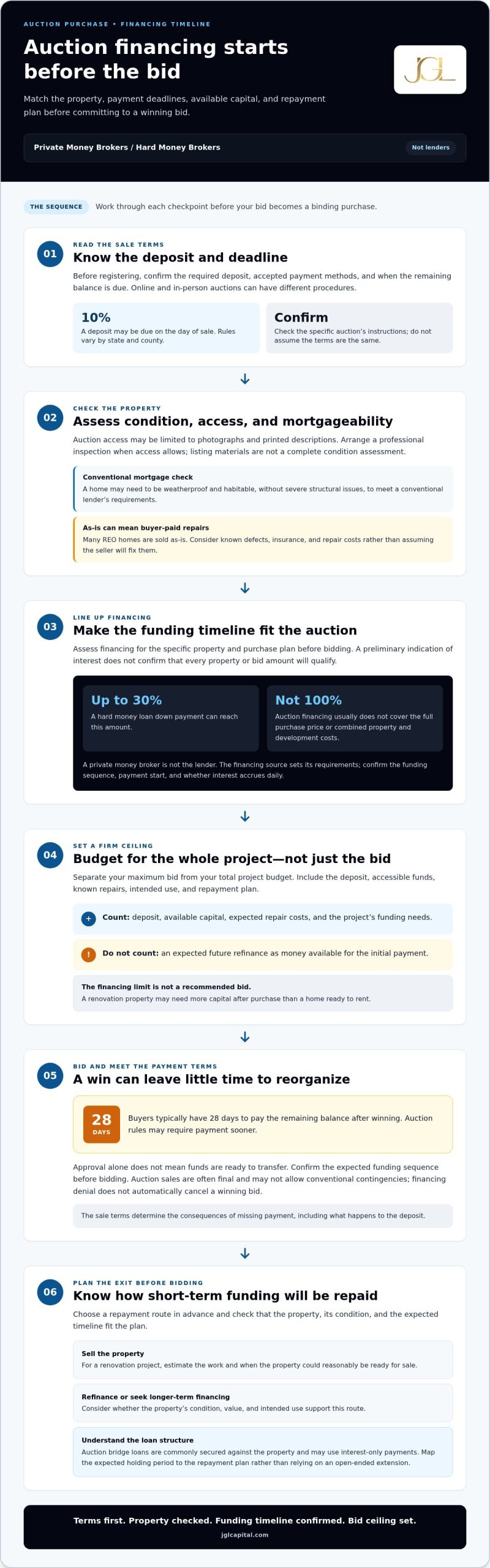
Read the auction terms before registering, then note the required deposit, accepted payment methods, and remaining-balance deadline. Buyers commonly need a 10% deposit on the day of sale, but rules vary by state and county. Confirm the specific auction’s requirements before committing funds.
Set a maximum bid that accounts for the deposit and the funds you can access by the deadline. Also consider the property’s intended use, such as rental income or renovation and resale. Don’t count an expected future refinance as money available for the initial payment.
-
Prepare a Repayment Strategy Before Bidding
Choose a repayment route before bidding: sell the property, refinance it, or seek longer-term financing. Each route depends on the property’s condition, value, and intended use. For a renovation project, estimate the work and consider when the property could reasonably be ready for sale or refinancing.
Ask the lender or broker how the proposed loan is structured, including when payments begin and whether interest accrues daily. Auction bridge loans are commonly secured against the property and may use interest-only payments. A borrower should map the expected holding period against the repayment plan, rather than relying on an open-ended extension.
-
Match the Auction Rules to Your Funding Timeline
Check whether the sale is online or in person, and read its registration, deposit, and payment instructions. Auction formats differ, and each sale sets its own bidding procedures. Make sure your financing plan accounts for the exact process, including how and when the auction accepts the deposit.
After winning, buyers typically have 28 days to pay the remaining balance. That deadline makes prearranged financing essential; approval alone doesn’t mean funds are ready to transfer. Confirm the expected funding sequence before bidding, so each step aligns with the auction’s stated payment schedule.
Auction bid limits and lender notification
Set a firm ceiling before bidding and align it with financing options for that specific property. A preliminary indication of interest doesn’t establish that every property or bid amount will meet a lender’s requirements.
- Ask the lender to define the financing limit for the property and purchase plan. Auction financing lenders usually don’t cover 100% of the purchase price or combined property and development costs. For hard money loans, the down payment can reach 30%, so calculate how much capital you can contribute before setting your bid ceiling.
- Separate your maximum bid from your total project budget. For example, a property needing substantial renovation may require more capital after purchase than one ready to rent. Include the deposit, expected repairs, and repayment plan in your assessment; a lender’s maximum is not a recommended offer.
- Notify the lender about the specific auction property before bidding. Share the address, auction date, intended use, available condition details, and your proposed bid range. These facts help the lender assess the collateral and financing structure. An experienced borrower can also explain how the purchase fits the planned sale, refinance, or rental strategy.
- If you win, promptly share the final bid and payment deadline with your financing contact. The actual purchase price informs the lender’s next steps, and a bid above the discussed range can change the financing assessment. Compare projected costs and repayment timing with your exit plan before committing, rather than relying on a later adjustment.
Hard money funding for winning auction bids
Private-money financing may suit investors facing an auction’s compressed payment timetable, particularly when property condition limits conventional mortgage options. Treat it as short-term financing that requires a defined repayment route, not as a substitute for a complete project budget.
- Present the property and your plan to a prospective lender before bidding. Private-money lenders may consider property value alongside borrower qualifications, liquidity, experience, documentation, and the exit strategy. Share available property details, intended use, and expected repairs so the lender can assess the collateral and transaction, not just the auction price.
- Build the funding calendar around the sale date. Hard money loans can be processed in as little as a couple of days, and some specialist lenders can advance auction financing within a few days. Those timelines don’t eliminate preparation: collect the property information and financing documents early, then confirm when funds can be available for the auction’s payment deadline.
- Calculate the full cost of holding the property. Hard money interest accrues daily, and auction-purchase rates can reach 12% or higher. Add interest for the expected holding period to repairs, insurance, and other project expenses. A delayed renovation or refinance can extend the borrowing period, so test whether your budget still works if the exit takes longer.
- Choose the repayment route before accepting funding. Auction bridge loans may be repaid through a property sale, refinancing, or conversion to a long-term mortgage. Tie that route to a practical milestone, such as completing repairs before listing or stabilizing a rental before refinancing. Hard money brokers arrange financing with lenders; they aren’t the lenders themselves.
For an auction purchase that needs short-term, property-backed funding, discuss private money broker services as part of your financing plan.
JGL Capital: New Construction Loans
JGL Capital LLC is a private-money broker, not a lender, and helps investors explore financing options for business-purpose real estate. If an auction purchase leads into development, JGL Capital LLC can help identify construction financing sources. Its Bridge Loans, Multifamily Loans, and Commercial Real Estate Loans may also be relevant to a short-term need or a property’s intended use, subject to lender requirements.
Suitable financing depends on the property’s intended use and condition, as well as the project’s repayment strategy. JGL Capital LLC helps borrowers identify private and institutional capital sources; it does not lend its own funds. If an auction purchase is part of a construction or commercial project, contact JGL Capital LLC to discuss the transaction and request an initial financing-fit review.
Carry Your Auction Plan Into the Next Decision
Treat a foreclosure purchase as part of a broader project, not an isolated transaction. Financing should account for the property’s next phase, whether that involves completing improvements, preparing it for rental, or positioning it for resale. Before proceeding, align the acquisition budget with the work required after closing and a credible repayment route for short-term capital. This keeps the winning bid connected to the investment plan.
A loan for buying a foreclosure at auction is only one part of that broader plan. JGL Capital is a private money broker, not a lender, and can help investors consider financing options for real estate projects. Contact JGL Capital about auction financing to discuss how the capital strategy may fit your next property decision.
With a clear plan for the acquisition and what follows, you can assess the opportunity more deliberately and make informed decisions.
Frequently Asked Questions
Do you have to pay cash for a foreclosure?
No. Buyers may use financing, including a mortgage or short-term, property-backed financing, if it meets the auction’s requirements. Cash can simplify payment, but it isn’t the only way to buy. For example, an investor may explore bridge financing for an auction purchase, then plan to repay it through a later sale or refinance, subject to lender approval. Establish the financing and repayment plan before bidding.
How do you buy a foreclosed home?
First determine whether the property is being sold at auction or listed by a bank after foreclosure, because the process differs. Review the sale terms, research the property and title, assess its condition, arrange financing, and set a firm purchase limit. For a bank-owned listing, the buyer submits an offer for review; at auction, the buyer follows the sale’s registration and bidding procedures.
What is a Foreclosure Auction and Trustee’s Sale?
A foreclosure auction is a sale in which a property is offered to bidders following foreclosure. A trustee’s sale is one type of foreclosure sale, conducted by a trustee under the applicable process. Procedures vary by state and sale notice. Before participating, identify who is conducting the sale, how bids are submitted, and what payment and property-access rules apply.
Why Not Get A Traditional Mortgage For A Property Bought at Auction?
A conventional mortgage may work if the property meets the lender’s condition standards and the lender can complete its process within the auction’s timetable. Some auction properties need substantial repairs, offer limited inspection access, or require payment before mortgage closing can be completed. Compare the property’s condition, lender requirements, and sale schedule before relying on mortgage financing.
Can you use a mortgage to buy a foreclosure at auction?
Yes, a mortgage can finance an auction purchase when the property qualifies and the funds can be delivered on time. For a home requiring repairs, an FHA 203(k) mortgage can combine eligible renovation funds with the purchase financing. That option involves its own property and project requirements, so it may not fit a sale requiring faster payment or a property with significant condition issues.
What types of loans can finance a foreclosure auction purchase?
Possible options include a conventional mortgage, a renovation mortgage such as FHA 203(k), or short-term bridge and hard money financing. The right structure depends on whether the property is residential or commercial, its condition, the auction schedule, and the borrower’s repayment plan. JGL Capital is a private money broker, not a lender, and helps borrowers explore business-purpose financing sources for eligible real estate transactions.