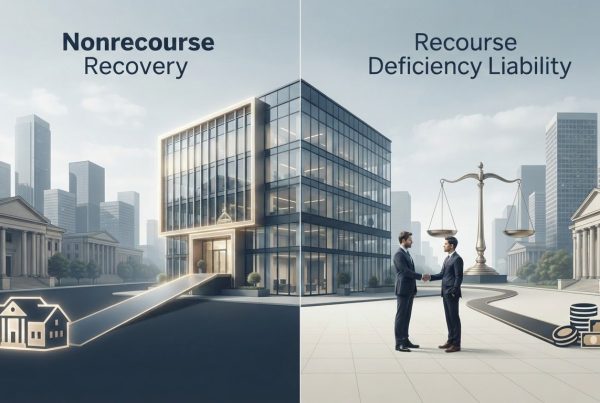

A blanket loan can simplify financing for multiple properties, but selling one may depend on its release terms more than it would with a separate mortgage. Release clauses in blanket mortgages specify when a property can be removed from the shared lien and how much must be paid to release it. The amount and conditions are set by the loan documents, not by a universal formula.
That distinction matters when an investor plans to sell or refinance a property, or replace one parcel with another. A release clause may allow the transaction without paying off the entire loan, but unclear or restrictive terms can limit the flexibility a blanket loan is intended to provide.
This article compares blanket loans with separate loans and explains how release calculations, lender discretion, and collateral substitution can affect a transaction. You’ll learn which terms to review before closing and how asset-backed financing options may fit into a broader real estate investment strategy.
Key Takeaways
- Compare one loan secured by several properties with separate loans by weighing administrative simplicity against the shared collateral and cross-default exposure.
- Review each property’s release formula before closing; a release amount may be tied to its allocated loan share, property value, or another agreed calculation.
- Plan sales, refinancing, and collateral substitutions around the written release conditions, since meeting them can determine whether a property can leave the shared lien.
- Read the loan documents alongside applicable law to understand whether release depends on stated tests or lender consent, and how ambiguous language could affect a transaction.
Blanket Loan or Separate Loans?
A blanket loan secures multiple properties under one mortgage, while separate loans finance each property individually. Its release terms may allow a borrower to sell one property without paying off the entire loan.
Releasing Properties Without Full Repayment
A partial release removes a specified property from the blanket lien after the borrower meets the agreed payment conditions. This may allow an investor to sell one asset while keeping the remaining properties financed under the same loan. The release clause determines the amount due and the process. Without an applicable release right, selling one property may require refinancing or repaying the loan, depending on its terms.
Allocated Balances and Release-Price Formulas
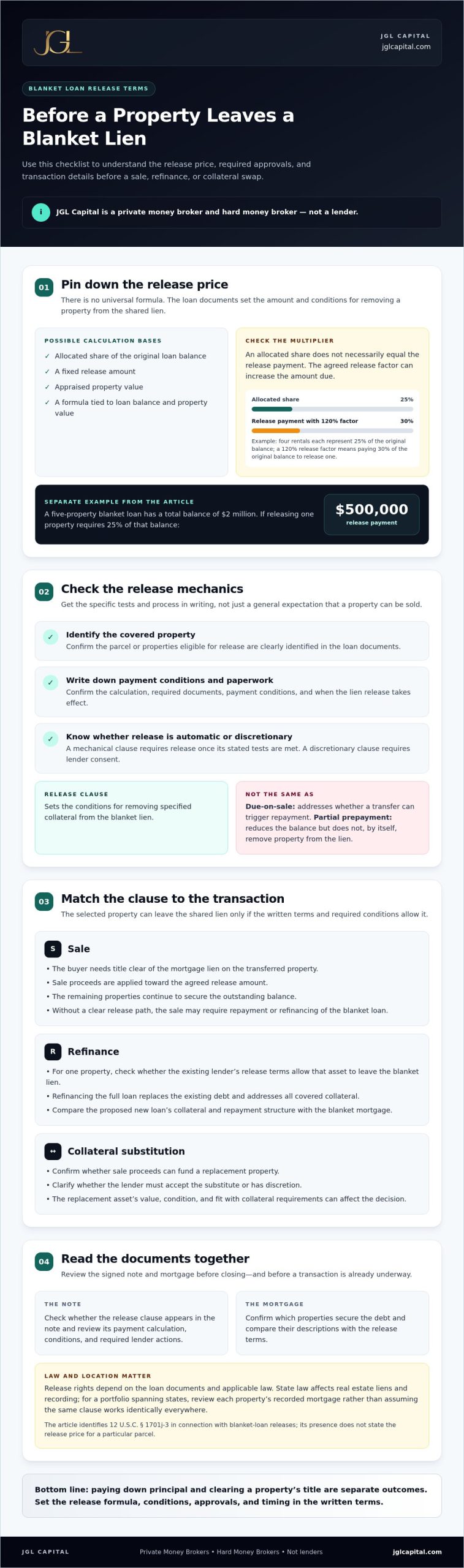
An allocated balance assigns part of the original loan amount to each covered property. A release price may use that allocation, a fixed amount, appraised value, or a formula tied to loan balance and property value. For example, if four rentals each represent 25% of the original balance, a 120% release factor requires paying 30% of the original balance to release one. Negotiating the formula upfront helps borrowers assess sale proceeds and remaining debt.
A Five-Property Loan Example
Consider a hypothetical blanket loan covering five properties, with a total balance of $2 million. If releasing one property requires 25% of that balance, the borrower must pay $500,000 toward the loan. The example shows why an allocation alone doesn’t settle the question: the release factor determines how much sale value remains available.
Release Clauses and Other Loan Provisions
A release clause governs the removal of specified collateral; a due-on-sale clause addresses whether a transfer can trigger repayment. Partial prepayment reduces the loan balance but does not, by itself, remove a property from the lien. Negotiate each provision before closing. Specify the covered properties, release-price calculation, payment conditions, and whether release follows stated tests or requires lender consent. Paying down principal and clearing title are separate outcomes.
Sale, refinance, and collateral substitution
A release clause sets the conditions for removing a sold property from a blanket lien. For a refinance, it determines whether existing debt remains against the other properties while the selected property receives separate financing. The outcome depends on the written release terms and whether the borrower meets their conditions.
When a property is sold, the buyer needs title clear of the mortgage lien on the transferred property. The borrower applies sale proceeds toward the release amount, and the lender releases the parcel when the agreement’s requirements are met. If the clause does not provide a clear release path, the sale may require repayment or refinancing of the blanket loan. The remaining properties continue to secure the outstanding balance.
A refinance can involve one property or the entire portfolio. If only one asset is being refinanced, the existing lender’s release terms determine whether that property can leave the blanket lien. Refinancing the full loan instead replaces the existing debt and addresses all covered collateral. Compare the proposed new loan’s collateral and repayment structure with the blanket mortgage before deciding which route fits.
Collateral substitution means replacing one property securing a loan with another. A clause may allow sale proceeds to fund a replacement property, but the agreement should clarify whether the lender must accept the substitute or has discretion. The new asset’s value, condition, and fit with the loan’s collateral requirements can affect the decision. A mechanical clause requires release once its stated tests are met; a discretionary clause requires lender consent.
Negotiate these terms before a sale, refinance, or replacement purchase is underway. Define how the release amount is calculated, which documents the borrower must provide, and when the lien release takes effect. Set out the substitution process, including the lender’s approval role and the standards for replacement collateral. Ambiguous terms can complicate a closing when the transaction depends on a specific property leaving or entering the lien.
For investors weighing a replacement asset, commercial real estate financing may form part of the financing plan. Aligning the property transfer, release payment, and new loan structure helps keep the transaction sequence clear.
What laws govern release clauses in blanket mortgages in the United States?
In the United States, release rights depend on the loan documents and applicable law. One federal provision identified in connection with blanket-loan releases is 12 U.S.C. § 1701j-3. Its presence does not state the release price for a particular parcel. The signed note and mortgage set out the transaction’s specific release terms.
State law also matters because real estate liens and their recording are governed by state legal systems. A property’s location can affect how mortgage documents are recorded and how lien disputes are handled. If a portfolio spans multiple states, review each property’s recorded mortgage rather than assuming the same clause works identically across the portfolio.
The note is central to the release process: the release clause must appear there for the described process to proceed. The mortgage also identifies the collateral securing the debt. Read both documents together, then compare the property descriptions, release conditions, payment calculation, and required lender actions. If those provisions conflict or use unclear terms, a sale or refinance can become harder to complete.
For a planned sale, identify the exact parcel and the clause governing its release. Confirm how the payment is calculated, which conditions must be met, and what documentation completes the release. For a refinance, determine whether the new financing requires the selected property to leave the existing lien. For collateral substitution, identify the provisions covering the replacement property and lender consent.
Keep the signed note, mortgage, amendments, and recorded documents together. A legal review can assess whether the release language fits the intended transaction and whether the documents describe the same property and payment method. The practical distinction is that federal law provides relevant legal context, while the loan documents and applicable state law shape how a particular release is carried out.
Do state laws require lenders to release property after partial repayment?
State law does not create one automatic release rule for every blanket mortgage in the United States. A borrower’s right to remove a parcel depends on the loan documents and applicable state law. Partial repayment alone does not erase a lien. The release provision sets the payment and conditions for removing the property.
Start with the promissory note and mortgage. Check whether the note includes a release clause, then compare its terms with the mortgage’s property descriptions. The documents should identify the parcel, release-payment calculation, conditions, and required lender action. If these provisions do not align, the borrower may be uncertain whether repayment will clear the lien.
The clause’s wording matters. A mechanical release provision requires release once the borrower meets its stated tests. A discretionary provision makes release subject to lender consent. This distinction determines whether partial repayment creates a contractual path to release or simply reduces the balance while leaving the property encumbered.
Consider a borrower who pays the amount required for one parcel but has not met another release condition. The clause may not yet require the lender to release that parcel. Barnes Walker explains that if a borrower does not meet the release price, the property remains subject to the blanket lien, preventing delivery of clear title. Repayment and lien removal are separate steps.
For a property in a multi-state portfolio, review its recorded mortgage and governing documents in light of the property’s state. Do not assume a release term applies identically to every parcel. Identify which state’s law applies, whether the clause is mandatory or discretionary, and what evidence shows each condition has been met. These details help define the release obligation.
If a portfolio decision also calls for financing guidance, discuss your property financing strategy with a private money broker.
JGL Capital: New Construction Loans
JGL Capital LLC is a private money broker, not a lender, and helps real estate investors explore financing options suited to their projects. New Construction Loans may be relevant to a development plan; Multifamily Loans and commercial real estate financing may suit projects focused on income-producing properties. Bridge Loans may also be relevant when a transaction calls for short-term financing.
Consider a blanket mortgage’s release terms alongside the financing structure for the next project. Account for the properties securing existing debt, the planned sale or refinance, and whether replacement collateral is part of the strategy. JGL Capital LLC can help investors assess financing options in light of these objectives, while the loan documents and release conditions remain essential to review.
Contact JGL Capital LLC to discuss financing for your real estate project.
Plan the Next Move With the Full Portfolio in View
Before pursuing a sale, refinance, or replacement property, consider how the transaction fits your investment plan. Think through the timing of each move, the capital required for the next acquisition, and the effect of existing financing on the sequence. A clear plan helps keep property decisions and financing discussions aligned.
Keep the release terms in view as you evaluate your next step. The conditions in release clauses in blanket mortgages may shape a transaction’s timing and structure, so include them in your planning rather than treating them as closing details. If the project involves new construction, multifamily property, or a need for bridge financing, JGL Capital can discuss financing options for the business-purpose transaction.
Contact JGL Capital to discuss your options and consider how the financing approach fits your project. A deliberate next step can help you move forward with greater clarity.
Frequently Asked Questions
Sale Release, Refinance Release, or Substitution?
A sale release removes the sold property from the existing lien, while a refinance release clears it as part of replacing or restructuring the debt. Collateral substitution exchanges one property securing the loan for another. For example, an investor selling a rental to acquire a different asset needs terms that address the incoming property, not merely permission to sell the outgoing one.
What Does the Release Price Look Like, and What Do You Net?
The release price is the amount the loan documents require before a lender releases a specific property. To estimate net sale proceeds, subtract that payment and the transaction’s other obligations from the sale proceeds. The result depends on the agreed release calculation and the transaction. The sale price alone does not show how much cash the borrower will retain.
What Exactly Is a Release Clause?
A release clause is a provision in loan documents that describes the conditions for removing specified collateral from a mortgage lien. It connects a particular property to a payment or other stated requirements. For a planned transaction, focus on the property description, release calculation, required evidence, and whether the lender must act once the borrower meets the clause’s conditions.
What Is a Blanket Mortgage?
A blanket mortgage secures one loan with multiple real estate parcels. An investor might use one loan for several rental properties instead of arranging a separate mortgage for each. Because the properties are linked as collateral, understand how a sale or default involving one parcel could affect the broader portfolio.
Why Can’t You Just Sell One Unit From a Blanket Loan?
A property covered by a blanket mortgage remains part of the loan’s collateral until its lien is released. A buyer may not receive title clear of that lien unless the loan documents allow a release and the conditions are met. Before marketing an individual property, identify the applicable release terms and account for them in the transaction timeline.
What is a release clause in a blanket mortgage?
The clause gives the borrower a contractual route to request release of a covered property under stated conditions. For a pending closing, use it to identify the required payment, written request, supporting evidence, and release document. Assign responsibility for each item early so the borrower, lender, and closing parties can coordinate without overlooking a required step.