

The traditional reliance on personal tax returns and debt-to-income ratios represents a structural bottleneck that frequently prevents sophisticated investors from achieving true institutional scale. Shifting your strategy toward a rental property loan with no income verification isn’t merely a tactical convenience; it’s a fundamental transition toward asset-based underwriting that prioritizes the intrinsic performance of the real estate itself. You likely recognize that the exhaustive documentation and personal financial audits required by conventional lenders often lead to missed opportunities and unnecessary closing delays. These legacy requirements fail to account for the sophisticated management of modern real estate portfolios.
This guide demonstrates how you can effectively decouple your personal liability from investment performance by utilizing Debt Service Coverage Ratio (DSCR) metrics to accelerate your acquisition pace. We provide a rigorous analysis of current May 2026 market benchmarks, including interest rate trends and loan-to-value requirements, to ensure your capital allocation remains disciplined. You’ll discover how to leverage property-centric capital to scale a multi-unit portfolio without the constraints of traditional personal income metrics, allowing for more rapid and predictable capital deployment across your entire investment strategy.
Key Takeaways
- Understand the shift toward property-centric risk assessment, which allows sophisticated investors to prioritize capital agility over the restrictive documentation of traditional institutional banking.
- Master the utilization of the Debt Service Coverage Ratio (DSCR) as the primary metric for evaluating an asset’s income-generating potential and its capacity for independent debt service.
- Secure a strategic advantage through a rental property loan with no income verification, facilitating the rapid deployment of capital while maintaining the highest levels of personal financial discretion.
- Identify the essential underwriting requirements for private capital, prioritizing property performance and credit integrity over the burdensome process of personal income verification.
- Align your strategic objectives with an expert partner committed to building lasting legacies through disciplined capital allocation and highly customized lending solutions.
The Evolution of Asset-Based Financing for Rental Properties
The landscape of real estate finance has undergone a fundamental transformation, moving away from the restrictive paradigms of personal-income underwriting toward a more sophisticated, property-centric risk assessment model. Sophisticated investors now prioritize capital agility over the low-leverage, high-friction environment of traditional bank financing. This shift is particularly evident in the 2026 market, where non-QM (Non-Qualified Mortgage) products have matured into essential tools for those maintaining a disciplined investment rhythm. By utilizing an asset-based lending framework, investors can bypass the structural inefficiencies of retail banking and focus on the intrinsic value of their acquisitions. Private capital plays a pivotal role in this evolution, providing the liquidity necessary to execute complex transactions without the bureaucratic delays inherent in personal financial audits.
Limitations of Traditional Income Verification
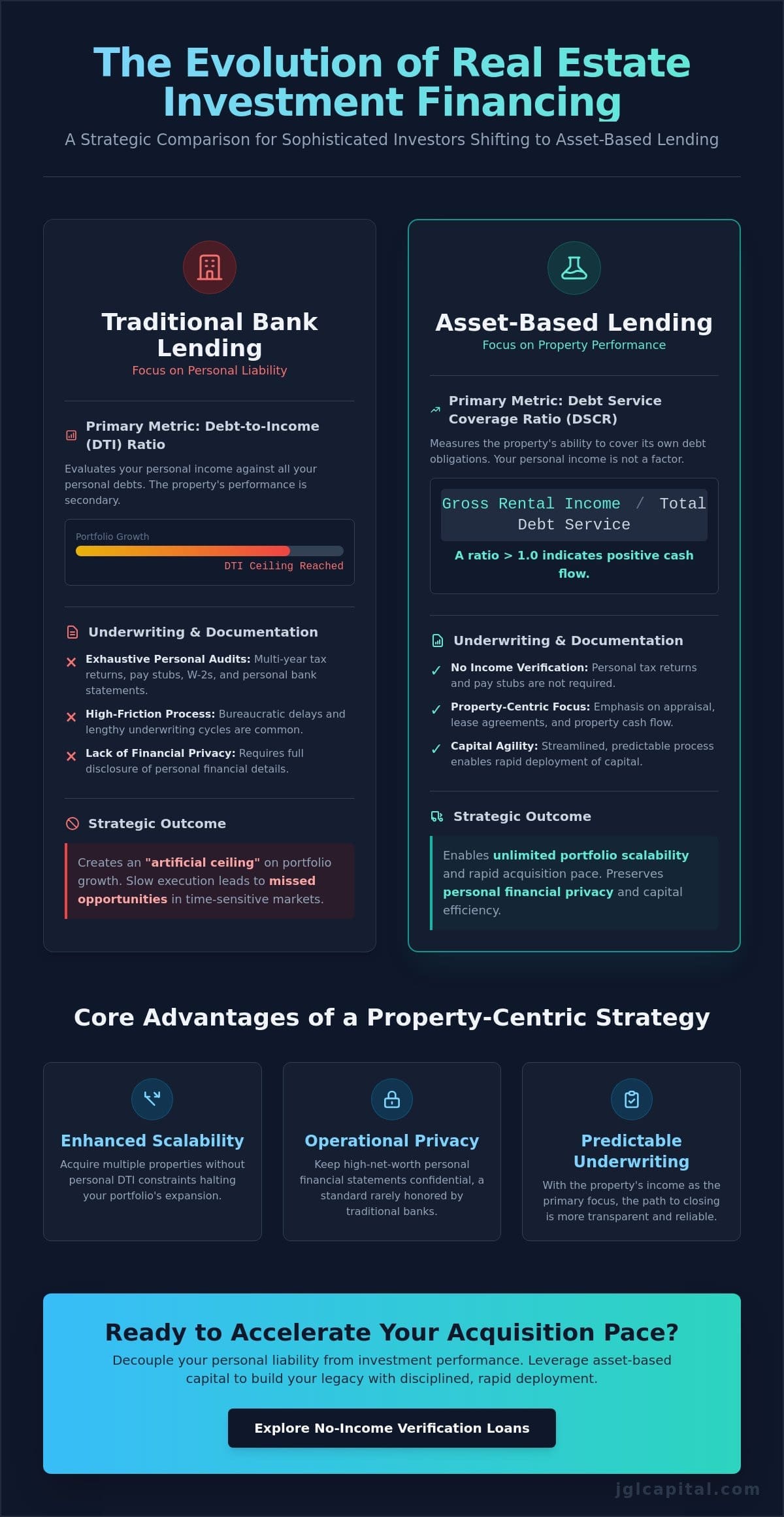
Traditional debt-to-income (DTI) ratios often serve as an artificial ceiling, capping the growth of high-performance portfolios regardless of the actual cash flow generated by the assets. For self-employed developers or those with complex corporate structures, the friction of providing multi-year tax returns and exhaustive personal financial disclosures creates significant operational lag. Conventional banking cycles, characterized by bureaucratic deliberation, frequently miss time-sensitive investment opportunities where speed of execution is the primary determinant of success. These legacy systems fail to recognize that a borrower’s personal tax profile is often a poor proxy for the viability of a specific real estate project. This misalignment creates a vacuum that only specialized, asset-focused capital can fill.
The Strategic Shift to Asset-Backed Lending
Modern real estate stewardship requires an institutional preference for property performance over personal liquidity. Securing a rental property loan with no income verification allows investors to preserve personal capital for other strategic deployments while ensuring that the debt is serviced by the asset’s own revenue stream. This model aligns the interests of the lender and the borrower through property-level cash flow rather than personal liability. It represents a transition from defensive, consumer-grade borrowing to an offensive, institutional strategy. Key advantages of this shift include:
- Enhanced Scalability: Investors can acquire multiple properties simultaneously without the DTI constraints that would otherwise halt a portfolio’s expansion.
- Operational Privacy: High-net-worth individuals often prefer to keep their personal financial statements confidential, a requirement that traditional banks rarely honor.
- Predictable Underwriting: When the property’s income is the primary focus, the path to closing becomes more transparent and less susceptible to the whims of personal credit underwriters.
This strategic pivot isn’t a workaround for those who cannot qualify for standard loans. Instead, it’s a deliberate choice by professional operators who understand that capital efficiency is the cornerstone of long-term wealth preservation. By focusing on the asset’s ability to generate worth, investors can build lasting legacies through careful, deliberate action rather than speculative trends.
Decoupling Personal Income from Real Estate Capital Allocation
The transition toward institutional-grade capital allocation requires a rigorous focus on the financial health of the property rather than the personal tax history of the investor. By prioritizing the Debt Service Coverage Ratio (DSCR), lenders shift the primary security of the loan from the individual’s earnings to the property’s income-generating potential. This analytical approach ensures that the capital deployment remains grounded in the asset’s ability to remain solvent through various market cycles. Professional operators understand that a rental property loan with no income verification isn’t a lack of due diligence but a more precise form of it. It focuses on the Net Operating Income (NOI), which provides a clearer picture of the investment’s worth than a personal W-2 ever could. In this framework, the property’s cash flow serves as the ultimate security for the capital provider, aligning the lender’s risk with the asset’s performance.
The Mechanics of DSCR Underwriting
DSCR is the ratio of a property’s annual net operating income to its annual mortgage debt service. To calculate this metric, the annual NOI is divided by the total debt service, which includes principal, interest, taxes, insurance, and any applicable association fees. As of May 2026, institutional-grade funding typically requires a minimum DSCR between 1.0 and 1.2, though a ratio of 1.25 or higher often secures more favorable interest rates. This margin provides a buffer against vacancy or unexpected capital expenditures, ensuring the asset remains a self-sustaining entity. When evaluating tailored rental property loans, sophisticated partners look for this level of coverage to confirm the stability of the investment.
Optimizing Property Performance for Better Terms
Investors can strategically improve their DSCR before applying for capital by focusing on operational efficiencies that increase the property’s net income. Reducing operating expenses through professional property management is one effective method, as it often lowers perceived risk and improves tenant retention. Furthermore, utilizing a market rent analysis, such as a Form 1007, allows the lender to justify higher loan amounts based on current market trends rather than historic lease data. This is particularly relevant in high-demand markets like California, where low vacancy rates support aggressive rental growth. By presenting a property that is optimized for performance, the borrower demonstrates a disciplined approach to the creation and preservation of value, which is highly regarded by asset-based capital providers. This methodical preparation ensures that the capital deployment is both rapid and strategically sound.
Evaluating the Strategic Advantage of No-Doc Rental Loans
Professional investors recognize that the nominal cost of capital is only one variable in a complex equation of worth. While traditional institutions might offer lower interest rates, their protracted timelines and exhaustive documentation requirements often result in a prohibitive opportunity cost. Utilizing a rental property loan with no income verification provides the requisite agility to secure high-yield assets in competitive markets, such as California, where the 4.1% vacancy rate as of May 2026 demands immediate execution. This strategic choice prioritizes portfolio velocity over incremental savings on debt service, ensuring that capital is deployed where it can generate the highest possible returns without the friction of retail banking delays. Speed is the primary determinant of success in high-stakes acquisitions.
Velocity of Capital vs. Cost of Debt
The decision to accept the interest rate premium associated with DSCR-based lending is grounded in analytical rigor rather than convenience. As of May 2026, these asset-based products typically carry interest rates between 1.00% and 2.00% higher than conventional investment loans. However, when an investor calculates the potential profit lost during a sixty-day bank audit, the higher rate becomes secondary to the preservation of the deal itself. For transitional assets, bridge loans offer a vital liquidity bridge, allowing the investor to stabilize a property before transitioning to long-term financing. This approach ensures that the investment rhythm remains uninterrupted, facilitating the acquisition of complex multi-family assets through a rental property loan with no income verification that requires decisive action.
Privacy and Simplified Compliance
Beyond the speed of deployment, asset-based capital offers a significant reduction in the administrative burden placed upon an investor’s back-office operations. By shifting the focus from personal financial history to property performance, the compliance process is streamlined, allowing the principal to maintain focus on resource management rather than document preparation. This simplified structure often aligns with the preference for non-recourse or limited-recourse debt, which serves to protect the investor’s broader estate from localized asset performance risks. In high-stakes real estate transactions, the value of privacy and discretion can’t be overstated. Asset-based lending respects this need, providing a sophisticated framework for capital allocation that protects the interests of high-net-worth stakeholders while fostering long-term growth.
Navigating the Underwriting Requirements for Private Capital
Securing a rental property loan with no income verification demands a transition from traditional personal financial audits to a rigorous evaluation of credit integrity and asset-level performance. While these institutional-grade products eliminate the requirement for personal tax returns, they don’t suggest a lack of analytical rigor. Lenders prioritize the borrower’s established history of financial responsibility alongside the property’s intrinsic income potential. This disciplined approach ensures that capital is allocated to projects with a high probability of long-term value preservation. Maintaining a credit score of 720 or higher is typically recommended to secure the most competitive terms, which as of May 2026, often fall within the 6.75% to 7.50% range for sophisticated investors. Even without income verification, your credit profile remains a vital indicator of your institutional character and commitment to debt service.
Core Borrower and Property Requirements
The Loan-to-Value (LTV) ratio serves as the primary mechanism for determining capital leverage and institutional risk mitigation. For the majority of rental property acquisitions, a minimum down payment of 20% to 25% remains the standard benchmark for professional capital. Certain specialized programs allow for an LTV of up to 85% for purchase loans up to $1 million, provided the asset demonstrates exceptional cash flow metrics. Beyond the quantitative data, a clearly articulated exit strategy is a prerequisite for any disciplined capital deployment. Whether the strategic objective involves long-term portfolio integration or a planned refinance, the capital provider must understand the lifecycle of the investment. Preparing the asset for a rigorous institutional appraisal is equally critical; the appraiser will conduct a comprehensive analysis of market rents and property condition to validate the asset’s underlying worth.
The Documentation You WILL Need
The terminology surrounding a rental property loan with no income verification refers specifically to the exclusion of personal W-2s and tax documents; it doesn’t imply an absence of due diligence. Investors must provide property-level data that confirms the asset’s operational stability. This includes current rent rolls, executed lease agreements, and comprehensive insurance policies. Because sophisticated real estate investment is frequently conducted through corporate structures, providing entity documentation for LLCs or corporations is necessary to facilitate the transaction. Lenders also require evidence of liquidity reserves, typically covering six to twelve months of debt service, to ensure the portfolio can withstand temporary market volatility. For those seeking to expand their holdings through disciplined capital, you can apply for a rental property loan to initiate the underwriting process. This methodical collection of data ensures that every strategic objective is clearly defined, reinforcing the overall stability of your real estate portfolio.
Aligning Strategic Objectives with JGL Capital LLC’s Rental Solutions
JGL Capital LLC operates on the fundamental principle that real estate investment represents a form of high-level strategic alliance rather than a mere series of transactional events. With over 30 years of industry expertise, the firm has refined a methodology that prioritizes long-term value preservation and the deliberate creation of lasting legacies for our partners. This approach requires a firm rejection of speculative market trends in favor of timeless principles of resource management and disciplined capital allocation. When a sophisticated investor seeks a rental property loan with no income verification, they aren’t merely pursuing a financial product; they’re engaging a partner that understands the gravity of high-stakes portfolio management. By streamlining the path from property identification to funded acquisition, we ensure that your capital deployment remains steady, logical, and aligned with your broader strategic objectives.
Individual Solutions for Sophisticated Portfolios
Our firm is committed to providing highly customized, individual solutions that are meticulously designed to meet the unique requirements of sophisticated portfolios. We believe that the absolute alignment of objectives between the capital provider and the investor is the cornerstone of successful stewardship. For those seeking to expand their presence in the market, leveraging commercial real estate loans for multi-unit growth offers a sophisticated path toward institutional scale that traditional retail banking products simply can’t match. JGL Capital LLC acts as a disciplined steward of your investment vision, providing the stability and deep-seated expertise required to navigate the complexities of asset-based underwriting. This specialized focus ensures that every strategy is clearly defined and every acquisition is positioned for long-term worth.
Initiating the Capital Allocation Process
The process of securing a rental property loan with no income verification through JGL Capital LLC begins with a collaborative and exhaustive evaluation of the target asset’s specific performance metrics. Every asset-based loan we broker is subjected to intense analytical rigor to ensure it meets our high standards for stability, security, and intrinsic worth. We don’t rush the investor through the underwriting process; instead, we follow a measured and steady rhythm that values precision and accuracy over superficial speed. This deliberate pace is essential for conducting the thorough analysis required for high-stakes real estate acquisitions where the margin for error is minimal. We invite you to contact JGL Capital LLC to discuss your specific funding requirements through a professional consultation, ensuring that your next strategic acquisition is supported by thirty years of intellectual capital and a commitment to institutional integrity.
Advancing Your Portfolio Through Strategic Capital Allocation
The transition toward a property-centric financial model represents a fundamental shift in how sophisticated investors preserve and grow their wealth. By decoupling capital acquisition from personal income metrics, you ensure that your portfolio’s expansion is limited only by the performance of the assets themselves. Utilizing a rental property loan with no income verification serves as the catalyst for this growth. It provides the agility required to secure high-value acquisitions without the administrative friction of traditional banking institutions. It’s a disciplined approach to capital allocation that fosters a more resilient and scalable investment structure.
Selecting a partner with the intellectual capital to support your long-term vision is the final step in this strategic evolution. With over 30 years of industry expertise and a specialized focus on asset-backed capital, JGL Capital LLC provides the stability and national reach required to execute complex transactions with precision. We invite you to consult with JGL Capital LLC to secure institutional-grade rental financing and discover how our individual strategic solutions can align with your specific objectives. Building a lasting legacy requires a deliberate and collaborative approach to the generation of worth. Your continued success remains the primary measure of our shared institutional interests.
Frequently Asked Questions
What exactly is a rental property loan with no income verification?
A rental property loan with no income verification is a specialized asset-based financing vehicle that evaluates a borrower’s repayment capacity through the property’s projected or current cash flow rather than personal tax returns. These non-QM products utilize the Debt Service Coverage Ratio to determine eligibility, ensuring that the investment stands as a self-sustaining entity. It’s a strategic tool for professional operators who manage complex portfolios where personal income documentation doesn’t accurately reflect their total liquidity or investment strength.
How does a DSCR loan differ from a traditional stated income mortgage?
While legacy stated income mortgages often relied on unverified borrower claims, a DSCR loan is grounded in the analytical rigor of property-level performance metrics. Modern asset-based lending requires verified rental income data, typically confirmed through professional appraisals or lease agreements. This transition from “no-doc” to data-driven underwriting ensures a more stable and disciplined approach to capital allocation, protecting both the lender and the investor from the speculative risks prevalent in previous market cycles.
What are the typical credit score requirements for no-doc rental loans?
Most institutional providers require a minimum FICO score between 620 and 660 to initiate the underwriting process for asset-backed rental financing. However, achieving optimal pricing and capital leverage typically requires a score of 720 or higher. As of May 2026, well-qualified borrowers in this upper tier can access interest rates ranging from 6.75% to 7.50%. This credit requirement serves as a proxy for the borrower’s institutional character and history of financial responsibility.
Can I use a no-income verification loan for a short-term or Airbnb rental?
Yes, these financing structures are increasingly utilized for short-term rentals and Airbnb properties, provided the asset demonstrates a consistent history of income generation. Lenders often analyze the previous twelve months of performance or utilize specialized market data to verify the property’s earning potential. It’s important to note that some programs may require a higher DSCR or a larger capital reserve to mitigate the inherent volatility associated with the short-term rental market compared to long-term leases.
Is a down payment required for asset-based rental property financing?
Asset-based financing typically requires a minimum down payment between 20% and 25% of the property’s appraised value or purchase price. While some specialized programs allow for a down payment as low as 15%, resulting in an 85% LTV for loans up to $1 million, these higher-leverage options often come with more stringent DSCR requirements. This initial capital commitment ensures a necessary alignment of interests and provides a protective buffer for the preservation of value within the investment.
How quickly can JGL Capital LLC fund a rental property loan?
JGL Capital LLC prioritizes a measured and steady approach that values precision over superficial speed, typically completing the funding process significantly faster than traditional institutional banks. By focusing on property-level data rather than exhaustive personal audits, our team streamlines the path to capital deployment. We conduct a thorough analysis of every acquisition to ensure it meets our rigorous standards for stability, allowing you to execute time-sensitive transactions with a confidence grounded in thirty years of expertise.
Are these loans available for primary residences or only for investment properties?
These loans are exclusively available for investment properties and are not permitted for owner-occupied primary residences. Following the implementation of the Dodd-Frank Act and the “Ability-to-Repay” rule, true no-income verification products are restricted to business-purpose real estate investments. This regulatory environment ensures that consumer-grade mortgages remain subject to personal income verification while allowing professional investors the flexibility to utilize asset-based capital for their rental portfolios.
What happens if the rental income does not cover the full mortgage payment?
If the property’s rental income is insufficient to cover the debt service, certain lenders offer “no-ratio” DSCR products that prioritize other risk factors like liquidity and credit. These specialized solutions often require a higher down payment or carry an interest rate premium to account for the increased risk to the capital provider. It’s a calculated trade-off for investors who identify high-growth assets that may not yet be fully stabilized or optimized for immediate cash flow.